
WOLF ELIMINATOR FOR VIOLIN, VIOLA, CELLO UND BASS:
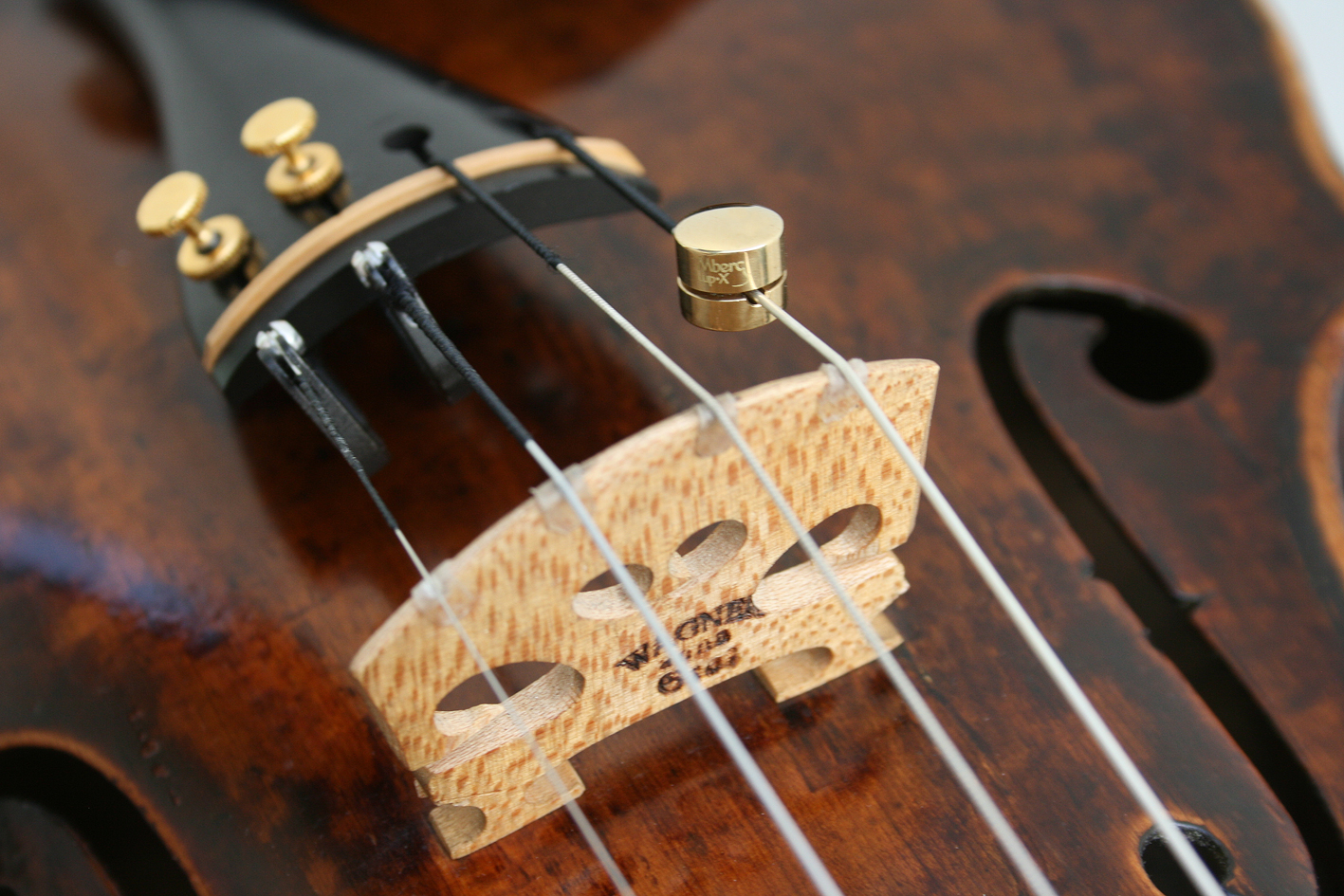
The lup.X clamps on the string on a highly defined contact point. This makes the lup.X uniquely precise and effective against problem wolf tones.
It does not contain materials like rubber. There are therefore practically no dampening effects, the instrument will keep its rich sound across its whole range.
The lup.X is easy to mount and adjust.
Its smooth shape and gentle brass finish give it a quiet elegance well suited to traditional bowed stringed instruments.
SPECIFICATIONS FOR VIOLIN & VIOLA:
material: brass highly polished
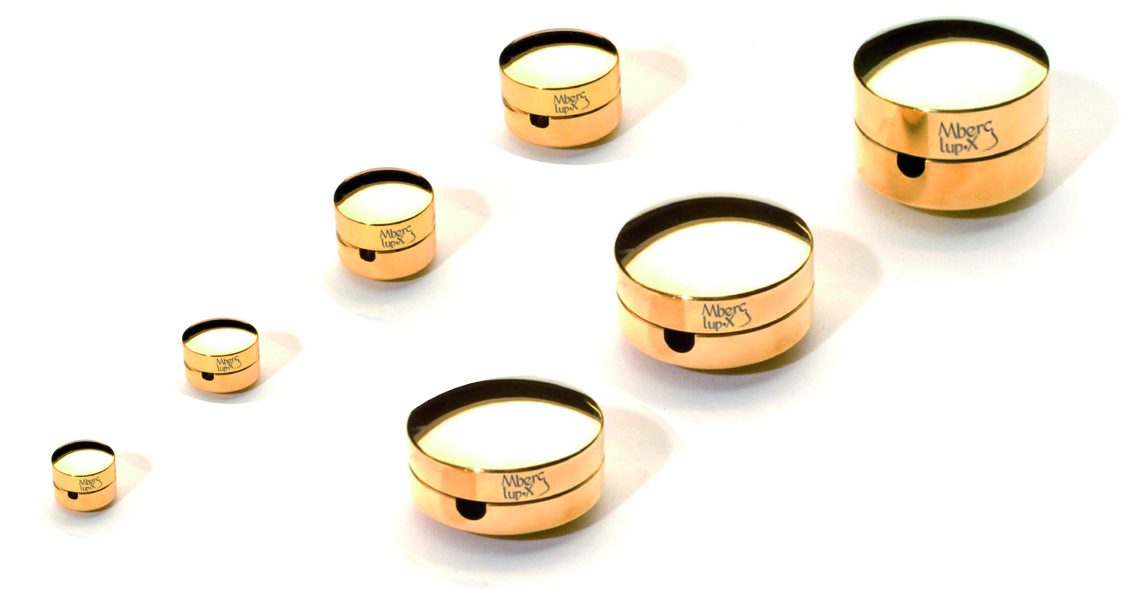
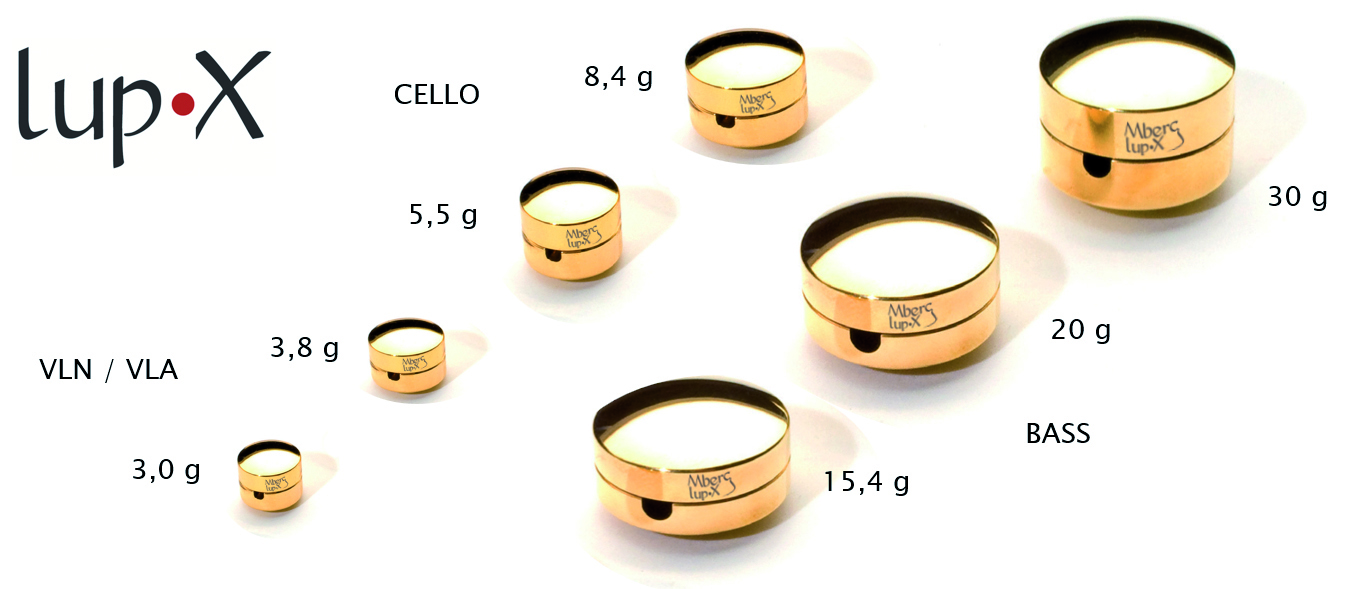
available weights: 3.0 g & 3.8 g
string sizes: all commonly used (C), G, D, A and E strings with diameters 0.5 bis 1.6 mm)
SPECIFICATIONS FOR CELLO:
material: brass highly polished
weights: 5.5 g & 8.4 g
string sizes: all commonly used C, G, D and A strings with diameters 0.6 to 2 mm)
SPECIFICATIONS FOR BASS:
material: brass highly polished
available weights: 15.4 g, 20 g, 30 g
string sizes: all commonly used E, A
and most D (and limited G) strings with diameters 1.2 to 2.8 mm
ABOUT WOLF TONES
Wolf tones are affected by unwanted interferences of resonant frequencies within the complex system of string bowed instruments. Mounting a lup.X wolf eliminator on a string between the bridge and tailpiece adds a node point which eliminates, or at least shifts, those unpleasant interferences.
Wolf tones reveal little about the quality of a stringed instrument, as they can occur even in highly valuable instruments.
ABOUT WEIGHTS
While the unique, selectively lup.X clamping mechanism minimizes the impact on the instrument's sound quality, a potential effect on the sound resulting from the addition of weight to the string cannot be ruled out.
Therefore, the following guidelines for selecting a weight class should be followed:
- String-specific adjustment (cello example): for C & G (F-sharp "wolf tone"!), opt for a heavier weight such as 8.4 g; for D & A, opt for a lighter weight such as 5.5 g.
- String type: light / medium / "heavy" or "strong":
Choose the weight class roughly in proportion to these designations.Important: A “heavier” string with higher tension generally reduces susceptibility to wolf tones. Switching from “light” to “heavy” strings, for example, can often eliminate a wolf tone sufficiently to make a wolf tone eliminator unnecessary. You can find a very good, detailed description of this on the Thomastik-Infeld Vienna information pages - Personal assessment of the severity of the problematic tones:
The choice of weight class involves a personal decision between effective elimination of wolf tones (heavier) and the least possible impact on sound quality (lighter).
HOW TO USE
The lup.X wolf tone eliminator is initially mounted between the bridge and the tailpiece, in the upper third of the string with the most pronounced wolf tone.
PRECISE POSITIONING
Generally, the effectiveness of the lup.X in eliminating a wolf tone increases the closer it is positioned to the bridge. However, please note that positioning the lup.X very close to the bridge can, in some cases, reduce the richness of your instrument's overtones.
Every instrument is unique, and its behavior regarding wolf tones varies accordingly.
The easy-to-use lup.X clamping mechanism helps musicians find their optimal setting quickly and simply. It also allows for rapid adjustments in response to changing environmental conditions (such as climate) through minor shifts in the lup.X's position.
Examples:
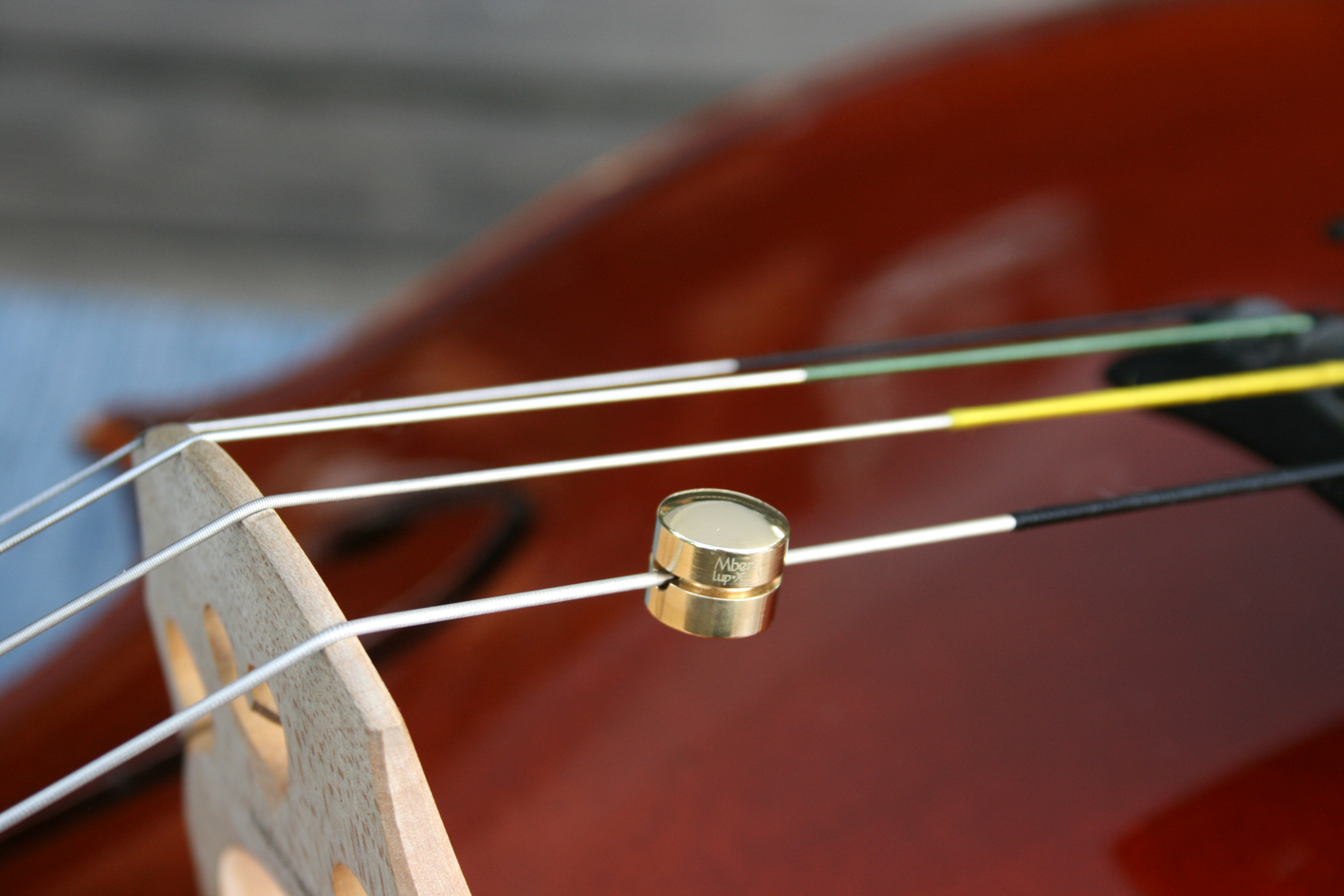
Cello 8.4 g
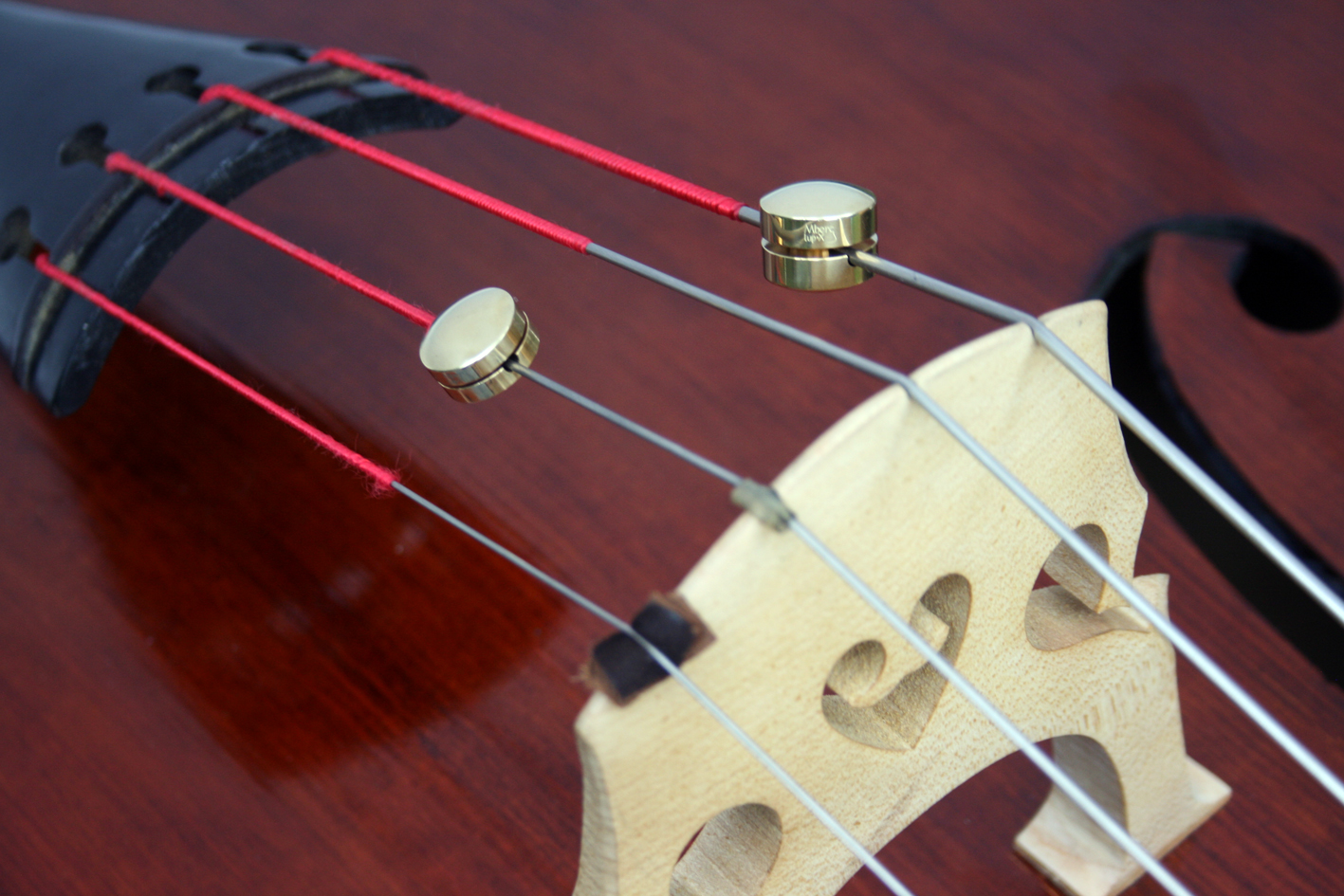
Bass 20 g & 30 g
Violine 3 g